news
How SoHo's Streetscape Lost Its Visual Identity, and What's Being Done to Get It Back
A decade of piecemeal signage approvals, landmark designation gaps, and rapid commercial turnover left SoHo's cast-iron corridors plastered with duplicated, mismatched storefront imagery, and community boards are now demanding accountability.
How we reported this
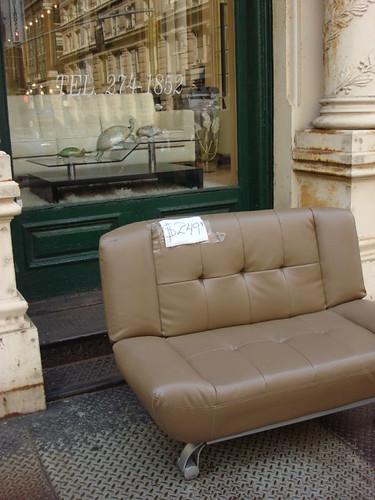
Walk the stretch of Broadway between Houston and Canal Streets on any given morning and you will see the same phenomenon repeated on almost every block: chain retailers and pop-up tenants displaying near-identical window graphics, oversized vinyl backdrops, and duplicated photographic imagery lifted from corporate brand libraries and pasted across historic cast-iron facades with little regard for what the buildings looked like before. It is not an accident. It is the cumulative result of roughly twelve years of permitting decisions, rezoning pressures, and understaffed city oversight that community advocates say created the conditions for a wholesale visual erasure of one of Manhattan's most architecturally significant commercial corridors.
The issue came to a head publicly in early 2025, when Community Board 2, which covers SoHo, NoHo, and the West Village, formally flagged what its land use committee described as a pattern of duplicated imagery installations that violated the spirit, if not always the letter, of the Special SoHo-NoHo Mixed Use District zoning rules updated in 2021. That rezoning, passed by the City Council after years of contentious debate, was intended to allow more residential use while preserving the area's manufacturing-era visual character. Critics argue it inadvertently created a grey zone around temporary commercial signage that landlords and national tenants quickly exploited.
The Paper Trail: Permits, Gaps, and the 2021 Rezoning
Before 2021, the bulk of SoHo's ground-floor commercial spaces fell under rules that required Landmarks Preservation Commission review for any external alteration on a designated building. The problem: not every cast-iron building in the SoHo-Cast Iron Historic District is individually landmarked, and the district-level designation covers architectural fabric but has historically been applied inconsistently to temporary graphic installations. The Department of Buildings, for its part, treats most vinyl or fabric window coverings below a certain square footage as exempt from standard signage permits, meaning hundreds of duplicate-image installations went up on Prince Street, Mercer Street, and West Broadway with no formal review at all.
A 2023 audit conducted by the Municipal Art Society of New York found that in a sample survey of ground-floor commercial facades across the historic district, roughly 60 percent displayed at least one element of duplicated or templated imagery, meaning the same photograph or graphic appeared on two or more storefronts operated by the same brand within a quarter-mile radius. The audit covered the period from 2018 to 2023 and was shared with Community Board 2 ahead of its 2025 resolution. The Municipal Art Society has been one of the most consistent institutional voices calling for tighter enforcement along the Broadway and West Broadway corridors specifically.
Landlords in SoHo, where average ground-floor retail asking rents along prime stretches of Spring Street and Prince Street have fluctuated significantly since the pandemic, have largely resisted pressure to impose stricter tenant signage requirements in leases. High vacancy rates between 2020 and 2022 gave incoming tenants significant leverage to install whatever visual merchandising their corporate offices mandated, regardless of neighbourhood guidelines. By the time occupancy recovered, the visual template was already set.
Where Things Stand Now
Community Board 2 passed a resolution in March 2025 requesting that the Department of City Planning and the Landmarks Preservation Commission jointly develop an enforcement protocol specifically addressing duplicated imagery and templated storefront graphics within the historic district. As of July 2026, that protocol has not been publicly finalised, though both agencies have acknowledged the request in correspondence with the board.
The SoHo Alliance, a neighbourhood advocacy group that has operated in the area since the 1990s, has been circulating a proposed set of voluntary storefront design guidelines among property owners on Wooster Street and Greene Street, two blocks where the historic character is considered most intact. The guidelines are non-binding but represent the kind of ground-up pressure that preceded earlier landmark victories in the neighbourhood.
For residents and small business owners watching the slow progress, the practical advice from land use attorneys familiar with CB2's work is consistent: document violations, submit complaints directly to both the Department of Buildings and the Landmarks Preservation Commission with photographs and addresses, and show up to Community Board 2's land use committee meetings, which are held monthly at the Robert J. Christen Community Center on Hudson Street. Paper trails, more than resolutions, tend to move city agencies.