news
DUMBO photo archive swells with thousands of duplicates
Arts and real-estate groups struggle with database bloat as cleanup costs mount across the Brooklyn neighborhood.
How we reported this
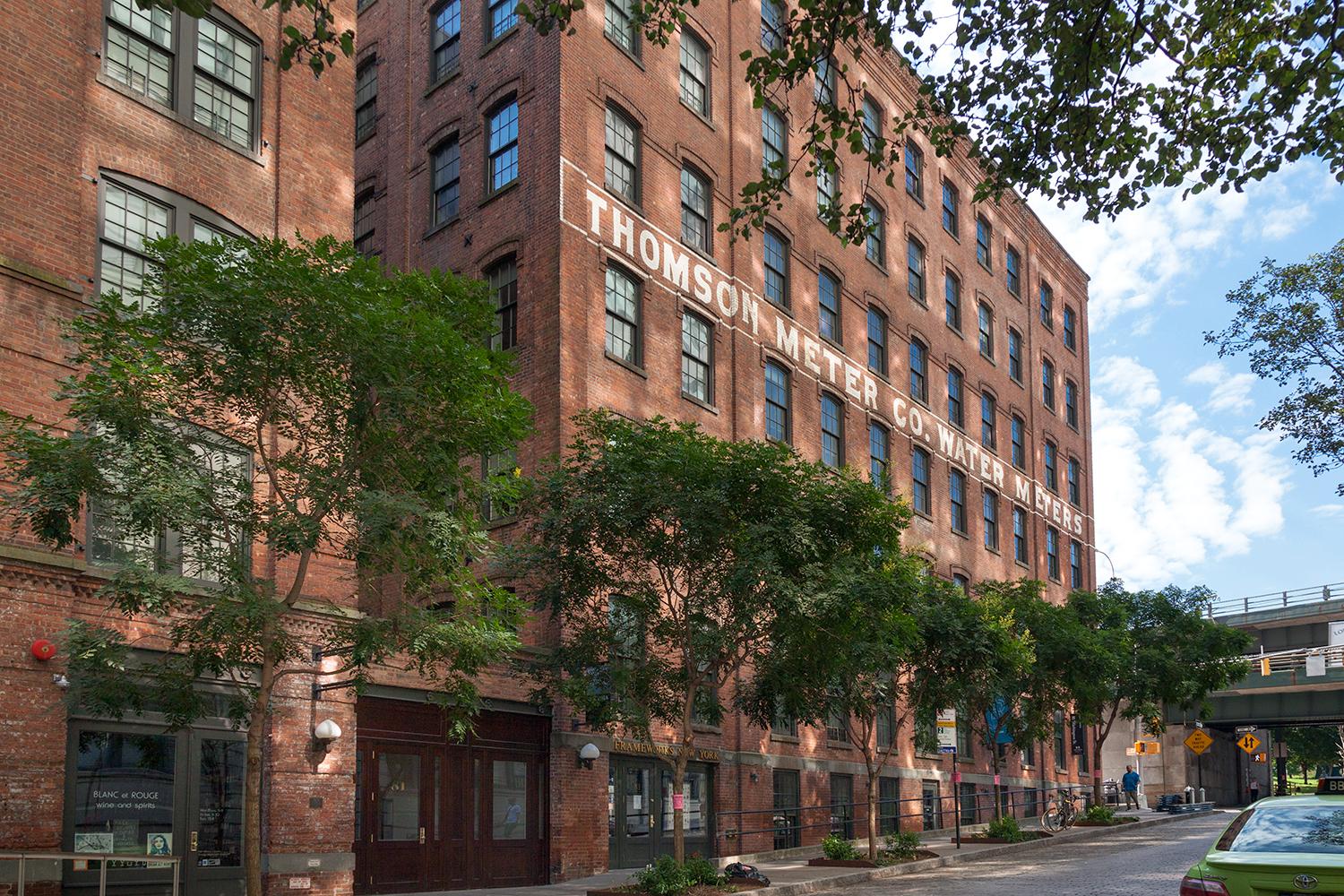
At least 34,000 duplicate image files are sitting inside the shared digital archives maintained by arts and commercial organizations along Washington Street and the DUMBO Arts Center network, according to an internal audit circulated among Brooklyn community stakeholders this spring. The redundant files are consuming an estimated 2.8 terabytes of server space, storage that costs money every month and slows retrieval times for staff who depend on accurate visual records.
The problem has become acute in 2026 because several DUMBO institutions are mid-way through large-scale digitization pushes. The Brooklyn Historical Society's Brooklyn collection, portions of which are housed in partnership facilities near the Manhattan Bridge anchorage, has been migrating physical photographic archives to cloud infrastructure since late 2024. When multiple staff members upload scanned images without a unified deduplication protocol, identical files accumulate rapidly, sometimes four or five copies of the same photograph sitting under different file names.
What the Numbers Actually Show
The scale of duplication varies sharply by organization type. Real-estate marketing firms operating out of the Empire Stores complex on Water Street tend to generate the highest raw volume of duplicate images, property photographs shot by contractors, re-edited by in-house designers, and then re-uploaded by listing managers, sometimes creating eight or nine versions of the same exterior shot. Arts nonprofits run leaner operations but face a different problem: legacy images from exhibitions at venues like Smack Mellon, on Front Street, were often scanned multiple times as technology improved, leaving archives with both low-resolution originals and high-resolution replacements catalogued under inconsistent naming conventions.
Storage costs on commercial cloud platforms currently average around $23 per terabyte per month for standard-access tiers. At 2.8 terabytes of purely redundant data, DUMBO organizations are collectively spending roughly $64 a month, or about $770 a year, to store files that serve no functional purpose. That figure sounds modest until you factor in the labor cost of staff time wasted searching archives that return multiple near-identical results. Industry benchmarks from the Library of Congress digital preservation program suggest that retrieval inefficiency in poorly deduplicated archives can consume between 12 and 18 percent of a digital archivist's working hours.
Perkins Eastman, the architecture firm with a significant presence in Brooklyn's design corridor, flagged a related issue in a February 2026 roundtable hosted by the DUMBO Improvement District: project documentation libraries that accumulate duplicates during collaborative workflows between offices create version-control failures, not just storage waste. The cost of reconstructing correct image lineage after a file conflict has been resolved can run into several billable hours per incident.
What Comes Next for Local Archives
The DUMBO Improvement District, which covers the roughly 30-block commercial zone bounded by the Brooklyn Bridge to the west and Jay Street to the east, is expected to release updated digital-asset guidelines for member organizations before the end of the third quarter of 2026. The framework is expected to recommend perceptual hashing, a technique that identifies visually similar images even when file names differ, as a baseline deduplication standard.
Several practical steps are already available to smaller organizations that cannot afford enterprise-level tools. Open-source utilities capable of perceptual-hash scanning can process an archive of 10,000 images in under four minutes on standard office hardware, flagging duplicates for human review rather than deleting automatically, a safeguard that matters when original photographs carry archival or legal value.
For tenants and cultural organizations in the Empire Stores, St. Ann's Warehouse, and the broader DUMBO Arts Center cluster, the most immediate action is an inventory audit. Knowing the actual duplicate ratio, the proportion of total stored images that are redundant, is the necessary first number. Without it, organizations cannot accurately forecast either their true storage costs or the staff-hours needed for a full remediation. In archives where that ratio has been measured elsewhere in Brooklyn, it has run as high as 41 percent of total file count. DUMBO's institutions have reason to move before that figure gets any larger.